-


Norma Supply Co.
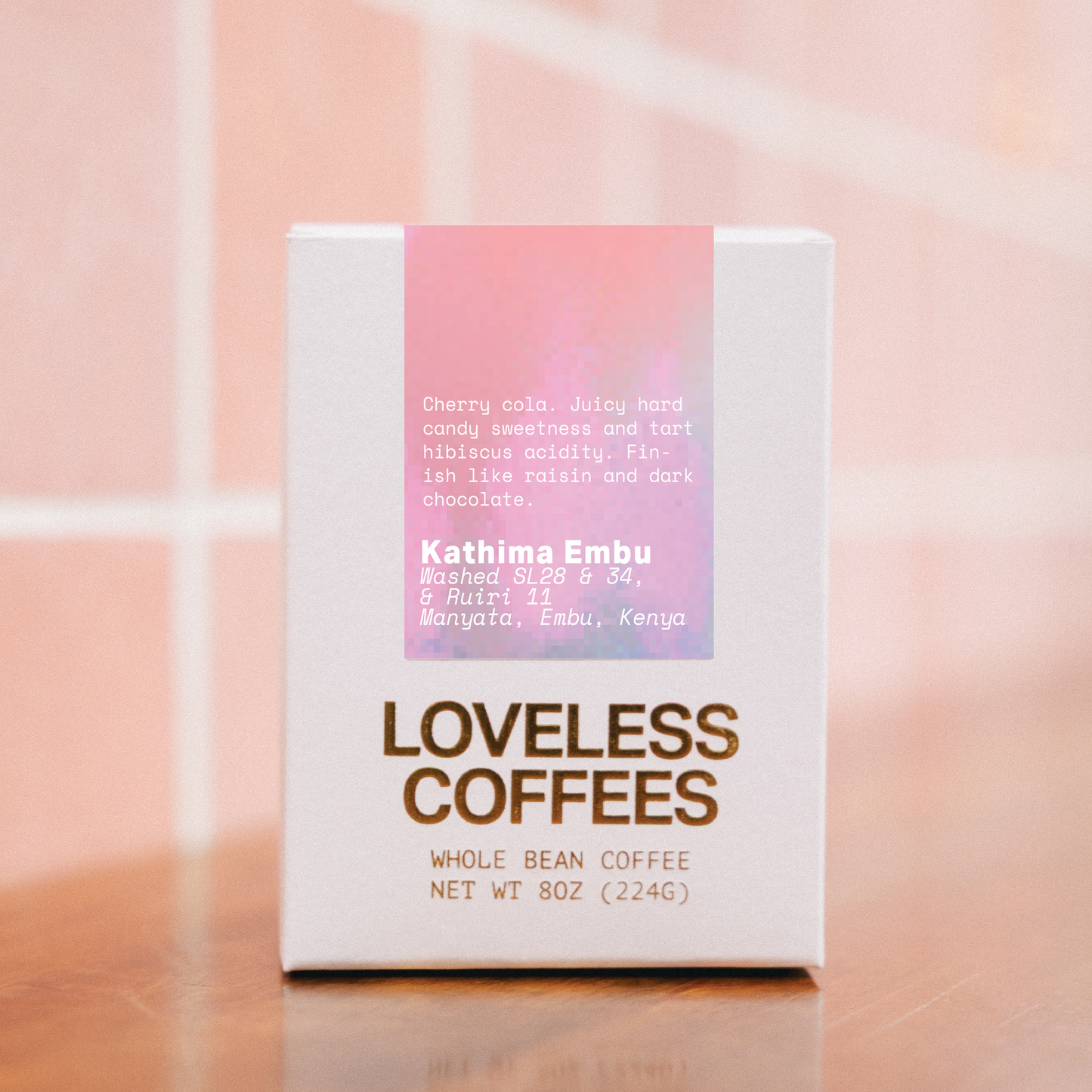
Loveless - Kathima Embu - Washed SL28 & 34, & Ruiri 11 - Manyata, Embu, Kenya - SL28, SL34, Batian, Ruiri II - Washed - Kenya 8oz
Loveless - Kathima Embu - Washed SL28 & 34, & Ruiri 11 - Manyata, Embu, Kenya - SL28, SL34, Batian, Ruiri II - Washed - Kenya 8oz
Couldn't load pickup availability
Roasted 8/25
Washed Kenyan microlot with cherry cola brightness and juicy sweetness
- Variety: SL28, SL34, Batian, Ruiri II
- Process: Washed
- Country: Kenya
- Region: Manyata, Embu
- Altitude: 1600-1800m
- Producer: Kathima Factory, 2200 Local Producers
- Harvest: 2026
- Tasting Notes: Cherry cola, juicy hard candy sweetness, tart hibiscus acidity, raisin, dark chocolate
About the Variety
SL28/34 is the most celebrated varietal in Kenya, grown almost exclusively by small-scale producers on subsistence farms. These varieties thrive in Kenya's nutrient-rich volcanic soil, producing coffees with strong citric and malic acidity, juicy flavors like raisin and ripe berries, and naturally complex flavor profiles without modern processing techniques.
Production
Kathima Factory in Embu sources from 2200 local producers across the Manyata region. The coffee is grown at high altitude between 1600-1800 meters, where volcanic soil and climate conditions contribute to the development of complex acidity and fruit-forward characteristics typical of the finest Kenyan coffees.
Roaster Notes
Great Kenyan coffee is about as bold in flavor and naturally complex as coffee gets without introducing modern processing techniques. Producers have small farms where they grow subsistence crops and a few coffee trees, almost exclusively of the SL28/34 varietal. The best Kenyan coffees have strong citric and malic acidity with juicy flavors like raisin and ripe berries, the result of nutrient rich volcanic soil and the famous SL28/34 varietal. The washed process is the standard method of preparing coffee before roasting. It results in high-clarity, delicate flavors. The process begins with mechanically de-pulping the coffee cherry, followed by repeated washing with clean water to ensure the complete removal of the fruit mucilage. The coffee is then fermented for a short period of time to remove the parchment layer, and then dried in a single layer either in the sun or in shade for several days.
Share